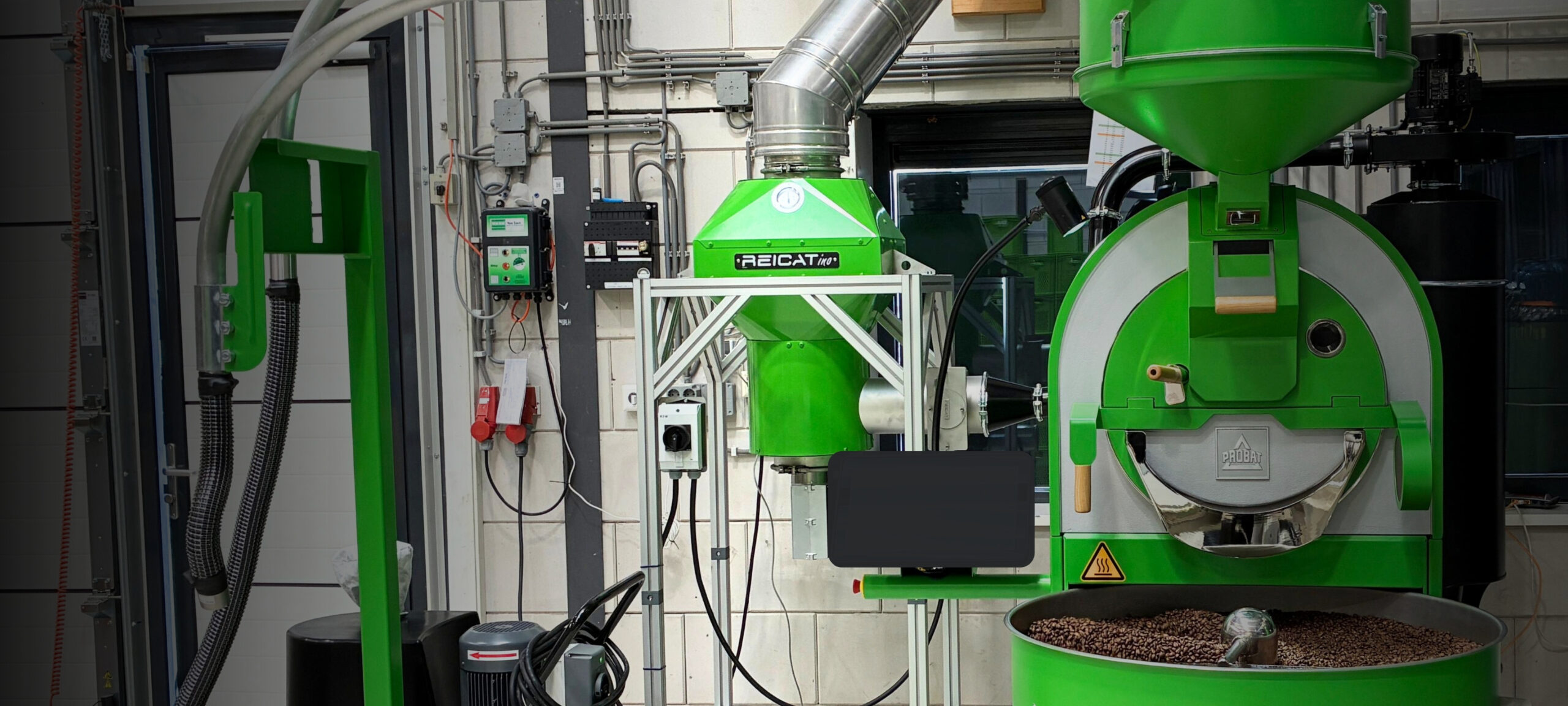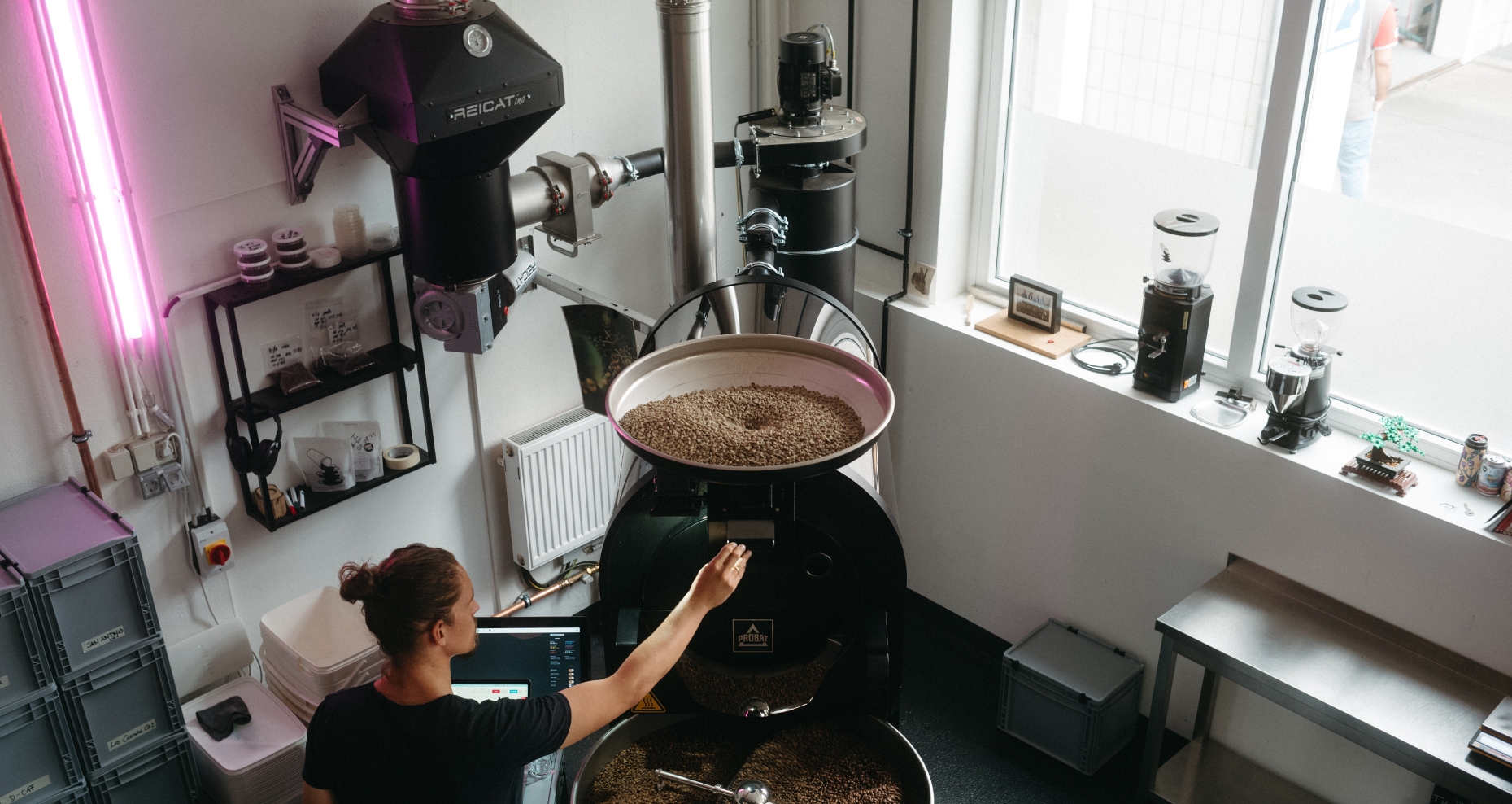
Planning a coffee roastery means making many decisions, and the exhaust system is easy to leave for later. It affects your permits, your neighbors, your running costs, and how smoothly your coffee roaster operates. The good news is that most of the information you need is already available. Before you request a quote, gather the technical datasheet from your roaster manufacturer and the three key figures below.
Are the roasting and cooling exhaust outlets separate or combined?
A coffee roaster releases two air streams: hot exhaust from the roasting drum and air from the cooling tray. Some machines combine them into one outlet, while others keep them separate.
Separate outlets are preferred. Cooling air is close to room temperature, and mixing it into the hot roasting exhaust increases the total air volume. More air means more air to heat. Mixing also cools the stream, so the catalytic exhaust treatment has to reheat the whole flow to its operating temperature, which takes a lot of energy. With separate outlets, only the roasting exhaust needs to be treated, so the system can be smaller and cheaper to run.
Is an external cyclone included?
A cyclone uses spinning air to separate chaff, the thin papery skin that comes off beans during roasting, before the air reaches the rest of the system.
This matters for the catalyst. Chaff that reaches the catalyst can block its surface and reduce its effectiveness. A cyclone removes most of the chaff upstream, keeping its performance stable. When you compare coffee roasters, check whether the cyclone is included or needs to be bought separately.
What is the roasting exhaust air volume (Nm³/h)?
Airflow, measured in standard cubic meters per hour (Nm³/h), is the main figure for understanding how much air the system must handle. It determines the capacity of the electric hot air blower that heats the air to catalyst temperature. More airflow means more air to heat, so this number is the starting point for selecting the right product for your coffee roastery.
What is the temperature after the cyclone?
The temperature after the cyclone shows how much heat the electric hot air blower must add before the air reaches the catalyst. Catalytic treatment works within a specific temperature range, so the air has to be heated to that level. The lower the starting temperature, the more heat energy is required. Together with the airflow, this figure determines the blower’s heating demand and how much energy your system will use to run.
Which coffee roasters does this apply to?
These questions apply to ReiCatino® systems for shop coffee roasters. Industrial roasters follow the regulatory requirements of their region, which vary by country and location. For those projects, contact us directly, and we’ll offer a system that meets the regulatory requirements that apply to your site.
What to send us
If the datasheet doesn’t cover everything, ask the manufacturer for the missing values. Then send the datasheet or the figures to ReiCat. We’ll tell you which exhaust air purification unit fits your space, often within minutes.