When planning a new coffee roasting line or modernising an existing facility, emission control is a key technical and financial consideration. The selected exhaust air treatment system directly influences energy consumption, operating costs and long term regulatory compliance.
Coffee roasting generates smoke and odour, as well as volatile organic compounds, carbon monoxide, nitrogen oxides and formaldehyde. These emissions must be reliably reduced to meet environmental requirements and to ensure efficient plant operation.
Two common technologies are used in roasting facilities: thermal afterburners and catalytic systems. While both aim to oxidise pollutants, their operating principles and long term impact differ significantly.
How a Thermal Afterburner Works
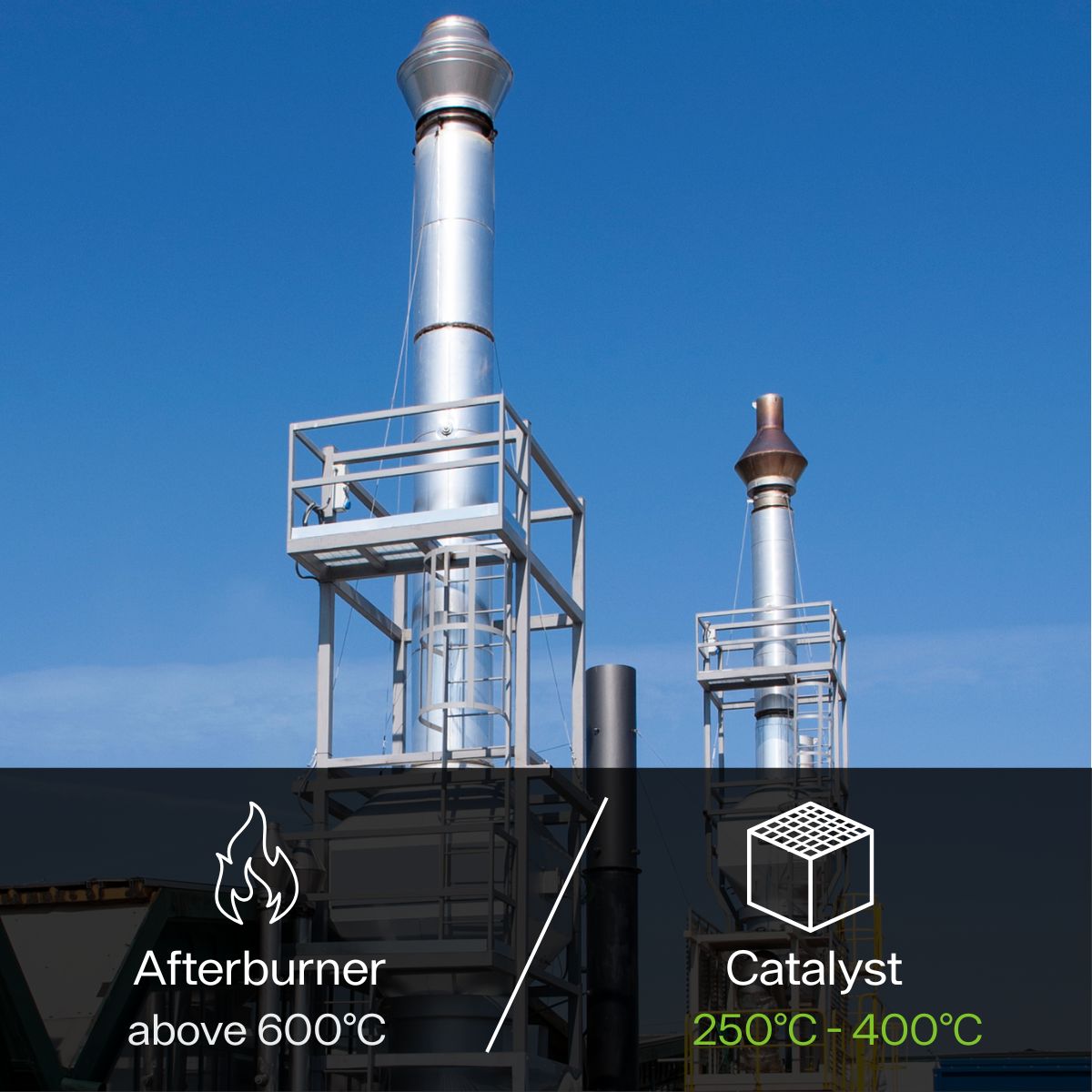
A thermal afterburner destroys pollutants through high temperature oxidation. Exhaust air is heated to temperatures often exceeding 600 degrees Celsius. At this level, VOCs and other harmful compounds break down into carbon dioxide and water.
However, maintaining such high temperatures requires substantial energy input. This directly increases fuel consumption and operating costs.
For roasters operating multiple batches per day, energy demand can become a significant cost factor.
How a Catalytic System Works
A catalytic system achieves the same oxidation reactions at much lower temperatures, typically between 250 and 400 degrees Celsius.
The catalyst lowers the activation energy required for the chemical reaction. This means pollutants can be converted efficiently without extreme heat.
Lower operating temperatures lead to:
- Reduced energy consumption
- Lower operating costs
- Improved overall energy efficiency
For facilities focused on reducing their environmental footprint, this difference is highly relevant.
Energy Efficiency and Cost Impact
Energy prices remain volatile across many regions. In roasting facilities, emission control systems often represent a substantial share of total energy use.
Reducing oxidation temperature by several hundred degrees can translate into measurable savings over time. Beyond direct fuel savings, lower thermal stress can also reduce wear on system components and extend equipment lifespan.
For roasters located in urban areas, where energy efficiency and environmental performance are under closer scrutiny, this can become a strategic advantage.
Environmental Considerations
Sustainability is becoming central to the coffee industry. Brands increasingly communicate their commitment to responsible sourcing, reduced emissions and climate conscious operations.
Choosing a lower temperature emission control solution supports:
- Reduced overall carbon footprint
- Lower fuel dependency
- Improved ESG performance
- Alignment with corporate sustainability goals
For industrial roasters in particular, environmental credibility often forms part of the brand identity.
Which System Is Right for Your Roastery
Both thermal afterburners and catalytic systems effectively treat emissions from coffee roasting. The key difference lies in temperature requirements and resulting energy demand.
For roasters aiming to reduce operating costs while improving environmental performance, catalytic technology offers a compelling alternative worth evaluating carefully.
If you are looking to reduce energy consumption and optimise emission control in your roasting process, explore ReiCat’s catalytic exhaust air purification systems for coffee roasters and discover how low temperature oxidation can improve both efficiency and environmental performance.